
Nanotechnology for Better Environment
Waste Heat Recovery with Thermoelectric Materials

This one‑month summer online course offers an exceptional academic experience featuring eight expertly designed lectures – two each week, led by four renowned professors, each internationally recognized for their influential research and leadership in that week’s specialized field.
Clean Water
Led by Associate Professor Tamar Segal Peretz
The supply of and access to clean water are considered one of the most pervasive problems of humanity in the 21st century. The lecture will provide an overview on current membrane technologies for water filtration and desalination and discuss our research on ultrafiltration membrane modification and reverse osmosis membrane synthesis using vapor-based processes.

A block copolymer (PS-b-P4VP) membrane was modified with SIS, tuned with ALD, and functionalized with silanes for molecular separations. https://doi.org/10.1002/adma.202105251
Giving Value to Waste CO2 and CH4
Led by Associate Professor Oz Gazit
The lecture will focus on the challenges involved in converting methane (CH4) and carbon dioxide (CO2), looking at things like their molecular structure, the reaction conditions, and the size of the process. We’ll also discuss how designing better catalysts can help overcome some of these difficulties.


Waste Heat Recovery with Thermoelectric Materials
Led by Professor Gideon Grader
It is generally accepted that global climate changes are mostly due to accelerated use of fossil fuels as the primary energy source over the past 150 years. An amazing fact is that over 65% of this energy is released into the atmosphere as waste heat. In this lecture we will examine potential of recovering some of this lost energy by thermoelectric materials that convert heat directly into electrical energy.

Fuel Cells: Towards a Sustainable Energy Future
Led by Professor Dario R. Dekel
The lecture will introduce how fuel cells convert hydrogen and other clean fuels into electricity with high efficiency and zero emissions, exploring their operating principles, the materials that enable them, and the scientific challenges that stand in the way of making fuel cells a major clean-energy technology.
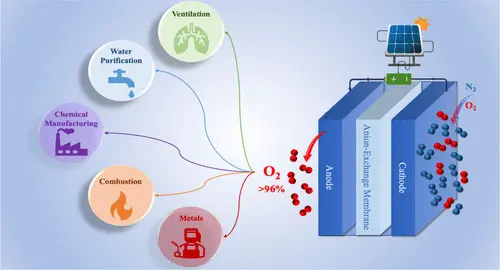
Led by Professor Gideon Grader

Learning Outcomes
By the end of the course, students will:
- Understand key environmental challenges and how nanotechnology can address them.
- Gain exposure to cutting-edge research and real-world applications.
- Develop critical thinking through interactive sessions and case-based learning.


Registration is Open until May 3, 2026
Application Deadline : 31.5.2026
Duration: July 2026 (4 Weeks)
Format: Online | 2 Sessions per Week (Lecture + Interactive Tutorial)
Who Should Apply:
- GPA above 3.0 in:
Chemical Engineering, Materials Science, Environmental Science, or related fields - Strong academic performance and motivation in STEM
- Passionate about using science and technology to drive sustainable change
- Interested in research, innovation, or real-world applications that contribute to a cleaner, more sustainable world
- Self-motivated, collaborative, and eager to learn
Undergraduate students who meet the following criteria:
How to Apply
To apply, fill in the form and email it to onlinesummer@technion.ac.il
Note: that this course does not grant Technion academic credit. Students from partner universities of Technion may request a "Certificate of Attendance" upon successful completion of special coursework at the end of the course.